Wednesday, 16 January 2013

Pitch for Main Task


Our original film pitch read like this: With her parents on holiday, 19 year old uni student Ava Van Camp decides to live life to the full. But who will protect her when an uninvited guest turns up?

However, it did not relate to our sub genre of horror, namely Gothic horror. Thus, we changed it.
The church bell strikes 11. It is night. Elizabeth is sitting alone in a pew. A shadow looms over her. She had better hold her breath.
 In this pitch, it was unclear who Elizabeth was so we altered it.
The church bell strikes 11. It is night. Nineteen year old Elizabeth sits alone in a pew. A shadow looms over her. She had better hold her breath.
 We decided to change the name to something more Gothic, but we decided it didn't work.  19 year old Ava VanCamp is not alone. Praying for her dead mother in a local church, she senses an eerie presence looming in the shadows. And it strikes.

Our feedback was as follows:

At the end of the second pitch, 'And it strikes' seems to be telling too much of the story. Making it indirect could have a better affect and also by using a cliffhanger to intrigue the audience.

To finish, our evaluation questions were:

1.How have you identified your target audience in your pitch?
2.Why would this film appeal to your target audience?
3.How would this fit with your chosen sub genre?
4.How is this different to other horror films?
5.Why did you change it?
6.What feedback did you receive to make you change this?

1. Our target audience will be drawn in because we mention the age of our main character and our target audience is estimated to be around this age. It will also relate to our audience because we haven't identified the character's current status. This will attract more young adults, as they can range from uni-students to assistant shopkeepers to training medical practitioners.

2. This film will appeal to our audience, because at this stage in their life they may be interested in religion and find it familiar to them and so this relates to our gothic horror genre, because our main task is set in a church.

* U N F I N I S H E D*

Tuesday, 15 January 2013

Blow Up (1966) Film Credits


At the beginning of the film Blow Up, the credits take place in the park where a much of the action takes place, and where the main character disappears at the end of the film. The credits are written in a large, plain  font with scenes mirrored in them, like cutouts.  The music played is unusually cheerful, as the film's general atmosphere is rather serious, due to it's plotline of a mysterious corpse a photographer notices in a picture he has taken. Interestingly, the majority of the  music used is diegetic, usually being played from a record player in the photographer's apartment or a live band (featuring Jimmy Page from Led Zeppelin) in a club.

Tuesday, 8 January 2013

Cecil B. Demented Tattoos


Cecil B. Demented
Directed by John Waters
 

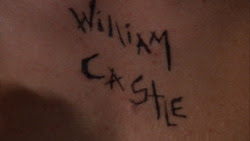
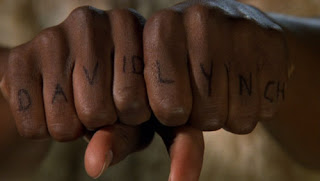
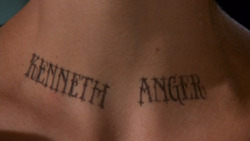
In the film Cecil B Demented, a group of terrorist film makers have the names of various underground film makers. Including William Castle, David Lynch, Pedro Almodóvar, Rainer Werner Fassbinder, Kenneth Anger, Sam Fuller, Spike Lee and Sam Peckinpah.


I thought this very original, as I had not seen anything like this before. The idea would be excellent to use as film credits. However, my group would be unable to do so as it would not correspond with our genre (gothic horror). Nonetheless, I found the idea interesting, especially as the film received negative reviews. 

Sunday, 16 December 2012

Location Shots

Location: Parish Church of Saint Mary and Saint John Graveyard


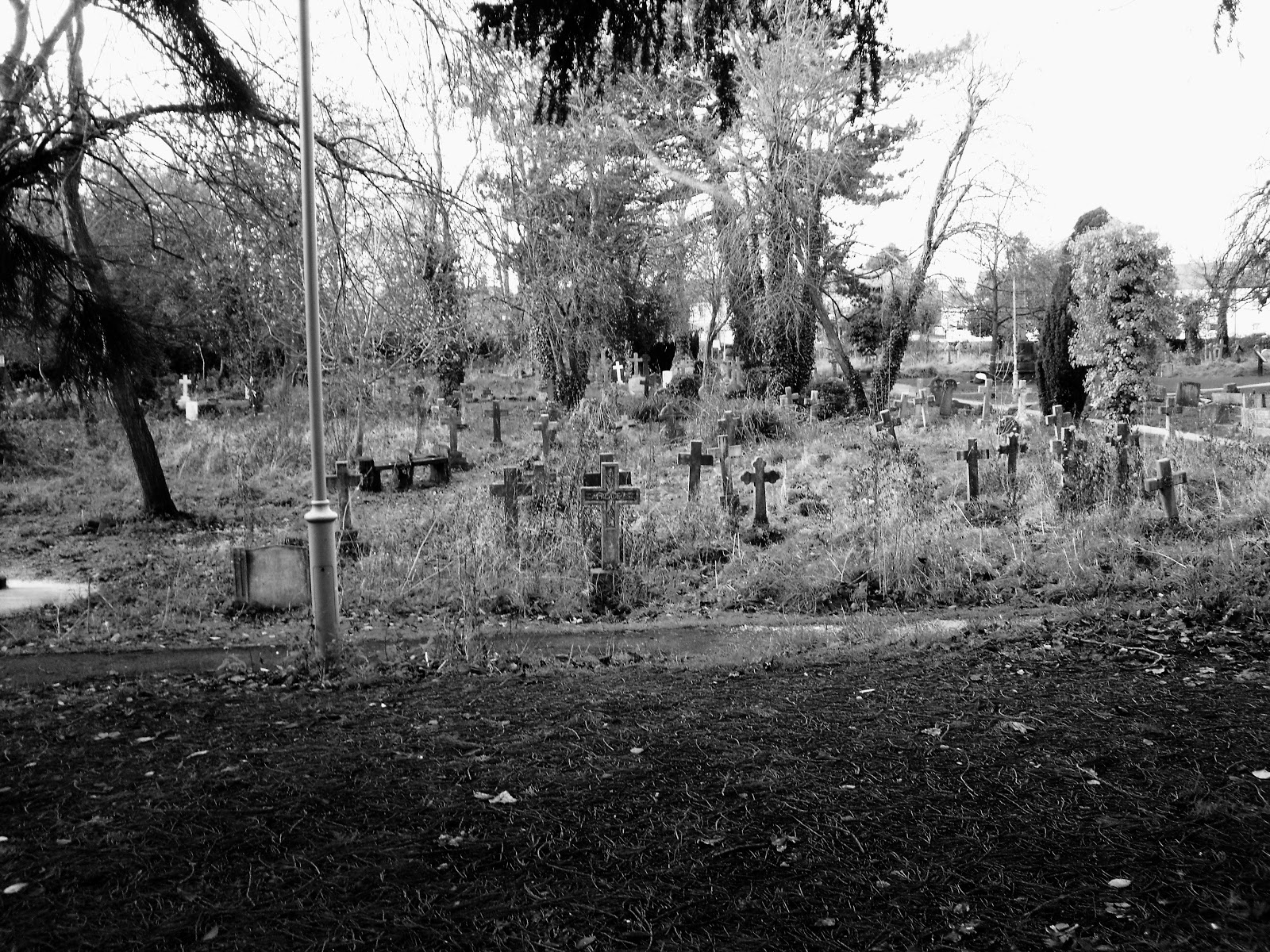
The setting for our film is a typical setting for a Gothic Horror film (graveyard), in order to keep with conventions. What makes this setting unusual is that it is in the very centre of the city and includes the graves of soldiers, children and infants among those of the typical. A graveyard usually evokes some sort of reaction from people, most commonly avoidance. As children, we are often told not to walk through them at night, as homeless people often reside there, increasing the fear factor.
The images below, a forest and a derelict house, would also have been appropriate settings for such a film, as they are also isolated and would provoke a reaction from an audience.


Thursday, 13 December 2012

Ted Hughes: Birthday Letters

Due my friend writing her extended project on this, I have chosen to read Birthday Letters by Ted Hughes. Although his poetry does not directly relate to the horror genre, I have found that some of his poems use aspects of horror;    as it [horror] is defined as: provoking a response, emotional, psychological or physical within each individual that causes someone to react with fear. Two of the poems I believe to have these aspects are TrophiesThe Machine and Karlsbad Caverns.

In Trophies, the lines "Its real prey/ Had skipped and escaped. So the fangs,/Blind in frustration, / Crushed your trachea, the strangled sounds" indicate this. The idea of such violent imagery is certainly a element of the horror genre. "Fangs" gives the connotations of vampires and feral animals, both of which are common themes within gothic horror. The word "crushed" suggests that the action was effortless for the killer and that the victim offered no resistance. 

So happy they didn't know they were happy,/ They were so busy with it, so full of it, / Clinging upside down in their stone heavens.

Birthday Letters  explored Hughes' complex relationship his wife, American literary poet Sylvia Plath.  The poems make reference to Plath's suicide, but none of them addresses directly the circumstances of her death. Hughes was blamed for her death and released Birthday Letters a few months before his death in 1998.

Tuesday, 4 December 2012

Main Task Experimentation, Market Research and Questions


What is the scariest film you have seen?
What was your most recent nightmare?
What is your greatest fear?
What doesn't scare you in horror films?

From asking these questions, we have discovered that most people are not afraid of blood or"scary" children. From doing this research, we now know what to avoid doing. We have conducted research into the film named by our target audience in order to identify the horrific components for our film.

 
1) What age are they?
     The audience we have decided upon are young adults and teenagers, between the ages of fifteen and twenty onwards. We have not included the ages before fifteen because of the rating the film may have and the effect this may have on younger viewers. For this film, I envision a young, university student.

2) What gender are they?
     Either male or female- we are not creating a film for a specific gender, but the specific target audience that we are meant to envision, we shall say female.

3) What is their marital status?
     As our target audience is mature to a certain extent, I believe that we could say that they are in a relationship with someone they love, be it in or out of wedlock.

4) What is their job?
     I would imagine that most of the people who fall into the age group that we have specified would be in either full time education or have a job. The jobs stereotypical students might have could be waitressing, taking calls, serving behind counters in various eateries, sorting stock in various large chains such as HMV, Waterstones, WHSmith etc.

5) Do they have children?
    It is possible that our target audience would have children. The Office for National Statistics show conceptions in under-18s fell to 34,633 in 2010 compared with 38,259 in 2009, a drop of 9.5%, indicating that the teenage pregnancy rate is falling, but that it still occurs, making it likely that part of our target audience may have children. However, this only accounts for 18's and under. Although it is rare for university students to have children, it can occur. 

6) What is their geographical region?     We imagine our target audience to reside in either in the United Kingdom, Australia and the United States of the America, as they are the major English speaking countries. However, our indiviual person lives here, in Oxford, UK. We found that it is easier to imagine and to relate the target audience if they are similar to us.

7) What do they spend their money on?
     We assume that our target audience would spend their money mainly on tuition fees, food and clothes.

*Please ignore the title of the video. It cannot be changed.*

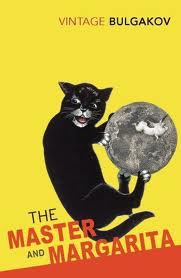
The Master and Margarita

I am currently reading the critically acclaimed novel The Master and Margarita by the Russian author Mikhail Bulgakov.
The story takes place in two settings; in 1930's Moscow and in the Jerusalem of Pontius Pilate.  
Summary:
The devil makes a personal appearance in Moscow. His retinue includes a two demons, a naked girl and a huge black cat that talks, walks upright, smokes cigars and is a dead shot with a Mauser automatic. Some of the devil's prank are sheer anarchic fun, more often they are chosen to bring out the worst everybody. When he leaves, the asylums are full, the forces of law and order are in dissaray and the population is haunted with feelings of guilt and shame. Amid this bizzare pantomime two people remain undiminished- the Master, a man single-mindedly devoted to the truth, and Margarita, the woman he loves.
Although I had not chosen to read this book specifically for Media, I have found that it relates strong to the theme/genre that we are studying: horror. Even though the book revolves around the devil, a figure typically associated with death, destruction and pain, he is portrayed completely differently as the audience would expect. Bulgakov writes in a variety of styles, most notably satire, farce, mysticism and romance.